
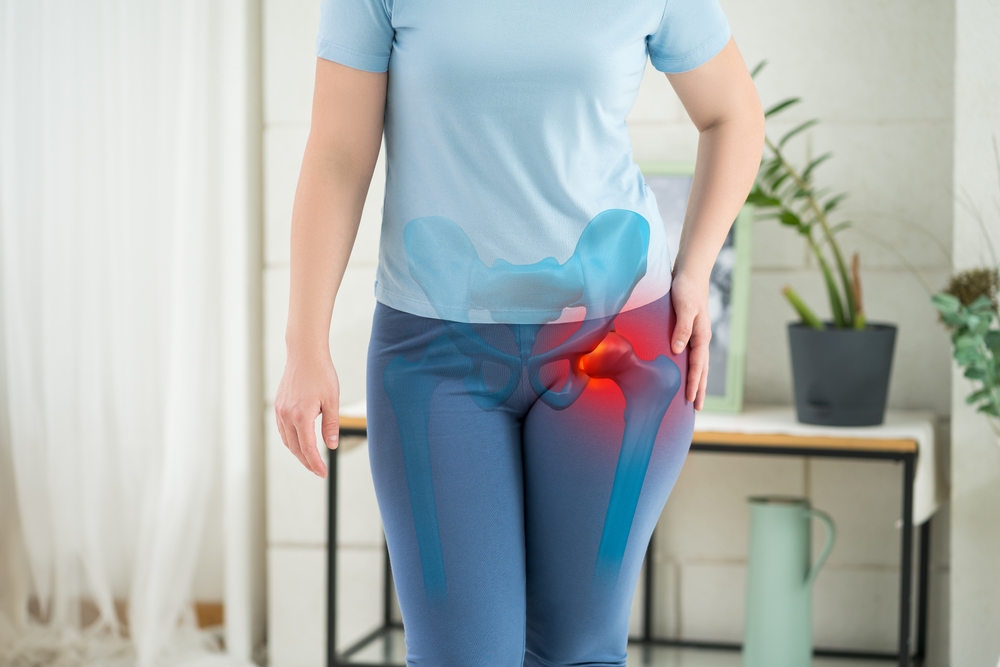
If you’ve ever asked, “Where is hip flexor pain felt?” then we’re here to tell you that there’s both a simple answer and a more complex answer. The complex answer is going to offer you more relief. See, most people expect a single point of discomfort, but the body doesn’t work in isolation. Pain in the hip flexors often reflects a broader pattern involving muscles, joints, tendons, and even neurological control.
At Apollo Health, Dr. Giudice approaches hip pain through precision pain and performance medicine. Instead of chasing symptoms, he evaluates how your entire system moves and functions. The goal isn’t just relief; it’s restoring movement, resilience, and long-term performance.
Where Is Your Hip Flexor?
Your hip flexors are not a single muscle. They are a group of muscles located at the front of your hip that work together to lift your leg and stabilize your pelvis. The most well-known include the iliopsoas (psoas major and iliacus), rectus femoris, and sartorius.
When people ask where hip flexor pain is felt, they are usually describing discomfort in one or more of the following areas:
- The front of the hip crease
- Deep in the lower abdomen or groin
- The upper thigh, especially near the pelvis
- Occasionally radiating toward the lower back
This variability is important. Because these muscles connect your spine, pelvis, and legs, irritation in one area can create symptoms elsewhere. What feels like “hip pain” may actually originate from the lumbar spine, pelvis, or even movement dysfunction in the foot or ankle.
This is why a narrow, isolated approach doesn’t work well.
Why Hip Flexor Pain Isn’t Always Local
The body is interconnected. Every step you take, every time you sit, stand, or twist, your hip flexors coordinate with surrounding systems. If one part of that system isn’t functioning properly, the hip flexors often compensate, and that’s when pain begins.
For example:
- Tight hip flexors may develop because the glutes aren’t activating properly
- Hip pain may stem from poor spinal stability or posture
- Overuse injuries may reflect inefficient movement patterns, not just muscle strain
So while you can talk about the hip flexor as a single structure, it’s rarely the whole story.
What Causes Hip Flexor Pain?
Hip flexor pain can develop suddenly or build gradually over time. In many cases, it’s not just one event — it’s a pattern of stress, compensation, and overload.
Acute Strain or Injury
A sudden movement such as sprinting, kicking, or changing direction can overstretch or tear the hip flexor muscles.
This is common in athletes but can also happen during everyday activities if the tissue isn’t prepared for the demand.
Prolonged Sitting
Modern lifestyles play a major role in hip flexor dysfunction.
When you sit for long periods:
- The hip flexors remain in a shortened position
- Blood flow decreases
- Muscles become tight and less responsive
Over time, this creates stiffness and increases the risk of strain when you stand or move.
Muscle Imbalances
Your body relies on balance between opposing muscle groups.
When that balance is disrupted:
- Weak glutes force hip flexors to overwork
- Poor core stability shifts load into the front of the hip
- Asymmetry between sides creates uneven stress
These imbalances are one of the most overlooked causes of you feeling hip flexor pain.
Repetitive Overuse
Running, cycling, and certain gym movements can place repeated stress on the hip flexors.
Without proper recovery or movement efficiency, small irritations accumulate into chronic inflammation or tendon irritation.
Previous Injury
Old injuries, even ones that seem unrelated, can change how you move.
Your body adapts to protect itself, but those adaptations often shift stress into the hip flexors over time, causing you to feel pain.
What Else Affects the Hip Flexors?
The Core and Abdominal Muscles
Your core plays a central role in hip flexor function. Because the hip flexors attach near the spine and pelvis, they rely heavily on proper core stability. When the core is not stabilizing effectively, the hip flexors often take on more responsibility than they should. This leads to overcompensation, unstable pelvic positioning, and increased strain, even during simple, everyday movements such as walking or standing.
The Glutes
The glutes are the primary drivers of hip extension and power, and they are essential for balanced, efficient movement. When they are weak or underactive, the hip flexors are forced to pick up the slack. This creates inefficient movement patterns and places excess demand on the front of the hip, leading to tightness, fatigue, and pain that continues to build over time.
The Lower Back (Lumbar Spine)
The connection between the hip flexors and the lower back is often overlooked. The psoas muscle, one of the most important hip flexors, attaches directly to the lumbar spine. Because of this, dysfunction in the spine can easily refer pain into the hip. Poor posture can increase tension in the hip flexors, while instability in the spine can disrupt how the hip moves altogether.
The Pelvis and Sacroiliac Joint
Pelvic alignment is a key factor in hip function. The pelvis acts as a central hub for movement, and even small imbalances can have a significant impact. Subtle shifts in alignment can change muscle activation patterns, increase tension on the hip flexors, and create asymmetrical movement that places uneven stress on the body.
The Hamstrings and Adductors
The hamstrings and adductors work in coordination with the hip flexors to guide and control movement. When these muscle groups are tight or weak, movement becomes restricted and less efficient. As a result, the body compensates, often shifting more stress into the front of the hip and contributing to ongoing tightness and irritation.
The Nervous System
The nervous system plays a foundational role in how all of these structures function together. Muscles rely on precise signals from the brain to activate at the right time and in the right sequence. When neuromuscular control is impaired, muscles may fire too early, too late, or not at all. This breakdown in coordination leads to inefficient movement patterns, increased strain, and pain that becomes chronic and difficult to resolve. It is one of the most critical and most overlooked components of recovery.
The Apollo Health Approach: Precision Pain and Performance Medicine
At Apollo Health, the goal is to identify not just where hip flexor pain is felt, but why it exists in the first place.
Dr. Giudice uses a structured, system-wide approach to uncover the root causes of dysfunction and guide targeted recovery.
Functional Neurologic Assessment
The first step is understanding how your brain and body communicate.
This includes evaluating:
- Balance and coordination
- Reflexes and motor control
- Sensory feedback and joint awareness
If the nervous system isn’t properly controlling movement, no amount of stretching or strengthening alone will fully resolve the issue.
Detailed Movement and Postural Analysis
Next, your movement patterns are assessed in detail.
This goes beyond basic observation to identify:
- Compensations during walking, running, or lifting
- Postural imbalances affecting the pelvis and spine
- Asymmetries that increase stress on the hip flexors
Pain often develops from how you move, not just where you hurt.
Precision Hands-On Rehab
Hands-on care is used to restore mobility, reduce tension, and improve tissue quality.
This may include:
- Targeted soft tissue work
- Joint mobilization
- Techniques to reduce inflammation and improve circulation
Restoring proper tissue function creates the foundation for lasting recovery.
Targeted Rehabilitation and Neuromuscular Retraining
Finally, treatment progresses into active rehabilitation.
This is where long-term change happens.
Your plan is designed to:
- Rebuild strength in key muscle groups
- Improve coordination and timing of movement
- Reinforce efficient, pain-free patterns
Without retraining how your body moves, pain is likely to return.
Learn About Hip Flexor Pain and More at Our Mamaroneck Clinic
If you’re dealing with persistent discomfort and wondering where your hip flexor pain is felt most deeply, it may be time to look beyond the surface.
At Apollo Health in Mamaroneck, Dr. Giudice provides a precision-based approach that connects the dots between pain, movement, and performance.Through comprehensive assessment and targeted care, you can restore function, improve resilience, and return to the activities you enjoy — with a body that works the way it was designed to. Tired of feeling hip flexor pain? Get started today and apply for a call with our team.